
Bestseller
Venice: Natural History Museum Entry Ticket
From 15,00 €
Buy the ticket
The Natural History Museum of Venice, named after Giancarlo Ligabue, formerly known as the Museo Civico di Storia Naturale di Venezia, is located inside the Fondaco dei Turchi along the Grand Canal. The Museum now collects and exhibits a collection from archaeological excavations carried out during paleontological, ethnological and anthropological expeditions and missions. In addition, there are exhibits from research conducted by naturalists both locally and in foreign countries. Special insights are devoted to the current habitat of the Venetian lagoon and the seabed of the Adriatic Sea.
The Museum is also very active as a popular and educational institution. Here, in fact, workshops, conferences, themed meetings for adults and children are organised, as well as educational activities in collaboration with schools and themed Summer Camps during the summer season.
The Giancarlo Ligabue Natural History Museum currently boasts a scientific heritage of thousands of exhibits. The natural history collections that were owned by the Museo Correr and the Istituto Veneto di Scienze Lettere ed Arti have been joined by other collections obtained through donations or acquisitions. The Museum now consists of five different sections spread over two floors.
On the ground floor there is the Cetacean Gallery, where visitors can follow an in-depth scientific study of these large marine animals and where the skeleton of a sperm whale (Physeter catodon) and that of a minke whale (Balaenoptera physalus) about 20 metres long can be found. Also on this floor is the Tegnùe Aquarium, a 5-metre long tank where the marine environment of the Upper Adriatic Sea has been recreated with the characteristic ‘tegnùe’. The tegnùe are special marine rock formations also known as Adriatic reefs and are characterised by a wide and unusual variety of flora and fauna.
The second floor houses the Museum’s most important collections. A first room is entitled ‘On the Trails of Life‘ and tells the story of the development of life forms from the appearance of the first visible living organisms (700 million years ago) to Homo sapiens. Another area is dedicated to the studies of the Venetian palaeontologist Giancarlo Ligabue, who took part in more than 130 missions in different parts of the world during his career. In particular, the mission to Niger between 1972-1973 led to the discovery of numerous finds over 100 million years old, such as the skeleton of a dinosaur Ouranosaurus nigeriensis and the skeleton of a Sarcosuchus imperator, the largest crocodile in history.
The Museum then tells about the great explorers and researchers who made the scientific collections on display possible. Thus, it is possible to delve into the work of Giovanni Miani, Count Giuseppe De Reali and the anthropologist and patron Giancarlo Ligabue, to whom the Museum is dedicated. The tour continues with a section entitled ‘The Strategies of Life‘, which provides an insight into how the earliest forms of life on earth evolved over time, with a focus on strategies of adaptation and specialisation.
Finally, it is worth mentioning that a section of the Museum is reserved for the Natural History Museum Library, which is one of the most famous natural history libraries both nationally and internationally. Here it is possible to find various texts, scientific studies also of great value, periodicals, documents and papers by illustrious naturalists and experts, especially of Veneto origin.
The ticket prices to access the Museum are as follows:
The Museum of Natural History is also included in the Museum Pass, the cumulative ticket that allows access to the Civic Museums of Venice and connected museums.
The Natural History Museum is open every day with the following opening hours: from 9.00 am to 5.00 pm (last admission at 4.00 pm). Monday: closing day.
The Natural History Museum is easily reached on foot or by waterbus. The site is less than 1 km away from Venice Santa Lucia Station and those wishing to reach it on foot can do so in less than 15 minutes. On leaving the station simply cross Ponte degli Scalzi and then follow the signs for Fondaco dei Turchi.
Those who want to travel by vaporetto, on the other hand, from the FS railway station and Piazzale Roma can take Line 1 or Line 5.2 to the Riva de Biasio stop. From Lido di Venezia, on the other hand, you can take the Line 1 waterbus to the San Stae stop, which is less than 400 metres from the museum. St. Mark’s Square, on the other hand, is less than 2 km away and is connected to the museum by the Line 1 waterbus.
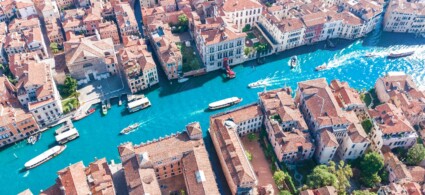
The Giancarlo Ligabue Natural History Museum is located inside the Fondaco dei Turchi, an important Venetian building overlooking the Grand Canal in the Santa Croce district.
City Card allow you to save on public transport and / or on the entrances to the main tourist attractions.
 Hotel
Hotel  Budget accommodations
  Apartments
  Family Hotel
  Luxury Hotel
  Resorts